The hotel hunt in Italy

Here are the top hotel-hunting tips that will help you land a bed in Italy every night no matter how close you cut it

For more info:
www.venere.com
www.booking.com
GetARoom.com
www.hostelworld.com

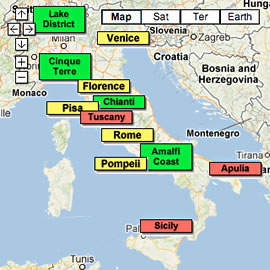
ReidsItaly.com Italy Map

» View ENLARGED MAP with all listings


Tours & Activities

Context Travel

Intrepid Travel

Gap Adventures

Viator

Venere
Destination:
From:
To:
Guests: Rooms:

  1. Use a booking engine. It's sad, but the best booking engines can often undersell the rates the hotel itself charges by a good 5% to 15%. Notice I was "the best booking engines." This rarely means the big three (Orbitz.comPartner, Expedia.com, Travelocity.com) or the major hotel sites (like Hotels.com).

    You need to use a true Italy specialist booking engine like Venere.com, Booking.com, or
    Hostelworld.com (which actually lists more inexpensive hotels than it does hostels). I'm serious. That's why I've partnered with these sites. On may last Italy trip, I found—and booked—every single hotel through either Booking.com or Venere.com because they had a better selection and lower prices than any other source (guidebooks included). » more

  2. Use your guidebooks. Hey, you shelled out twenty bucks for the things. Use 'em. Read the reviews of hotels thoroughly and figure out which ones best fit your taste and budget. Then prioritize your top half-dozen or so choices by scribbling 1, 2, 3, etc. in the page margins.

    If your first choice is already booked, this saves you the time and hassle of huddling around a pay phone in the train station with your companions saying, "Well, how does this one sound, then?" while another traveler is busy booking that free room in what would have been your second choice if only you had found it sooner. » more

  3. Check hotel websites. Not only will a hotel's own website (usually) provide you with the rack rates (the top going prices for each type of room, often broken down by season)—which will allow you to comparison-shop prices better at the booking engines—but it will also feature sales and promotions found nowhere else. You can find some amazing bargains, especially in the off-season, offering up to half off the rack rates. However, I immediately mistrust any hotel that isn't willing to post its rates on its own website. What are they hiding?

  4. Use TripadvisorTripAdvisor —just don't trust it completely. Look: TripadvisorTripAdvisor is great. It's an invaluable tool for finding out the latest, greatest (and worstest) about hotels and such. However, crowdsourced travel guides and wikis like this have one gargantuan flaw: they're written by amateurs.

    Your typical TripadvisorTripAdvisor reviewer has been to, say, Rome precisely once, and stayed in just that one room of that one hotel. She might be able to give you good intel on that particular inn—but how does it compare to the hotel next-door? Is there a hotel that's both better and cheaper just around the corner?

    That's where this site (and my two decades of expert experience) comes in handy. I've been to Rome dozens of times, stayed at scores of hotels, and toured all the rooms in literally hundreds of hotels across the city, viewing them with a critical eye and taking extensive notes. This helps me offer the best, balanced advice on Rome hotels, comparing them all to see which truly stand out as the best value for your money or as stellar places to spend your precious vacation time.

    By all means, to help you pick the perfect hotel go and read the guest reviews—not just at TripadvisorTripadvisor, but also at booking engines like Venere.com or Booking.com, where at least you're guaranteed the person writing the review actually stayed there. However, start your search for that hotel here, where I've already vetted the good ones.
  5. Call when you get to town. Hotel touts
    In most cities—Rome especially—as soon as you step off the train or boat hotel touts will swarm you in a feeding frenzy. Some are legitimately drumming up business, others are out to fleece you. Make sure they point to the exact location of their hotel on a map, and get the price set firmly in writing before you go off with them—and never pay in advance. Look at the photos they show you, but remember that a fisheye lens in the room's upper corner and a sneaky collage of the inn's best furnishings all in one room can make a dismal cell look like a palatial suite (well, almost). There's a lot that can go wrong with a hotel room—and a lot that the photos on the Web site won't tell you—so I play it safe by playing by ear. Sure, sometimes I have to scramble a bit to find a room, but I rarely get suckered into settling for a hellhole that's been paid for in advance.
    This is generally what I do. It almost never fails. If you're arriving in town without a reservation and haven't yet ranked those hotel choices (see step 2: guidebooks), do so during the train ride in.

    When you get to the station, buy a phonecard from a newsstand, hit the nearby payphones, and begin calling hotels immediately. This way, you get the drop on the many people who march out of the station lugging their bags and walk to the nearest hotel to see if there's room.

    I rarely have trouble finding a place by booking each night between around noon and 3pm that afternoon—which is usually the time by which I've decided in which town I'll want to be for the night.

  6. Use a local booking service. If you don't want to do the telephone legwork when you get to town yourself, a desk at the train station or tourist office usually runs a reservations service for a small fee (about $3 to $10). You tell them your price range, where you'd like to be in the city, and sometimes even the style of hotel and they'll use a computer database to find you a room.

    On the plus side, they always speak English (so do most hoteliers, but these folks often have a surer command of it, and that helps), and they can almost always find you something when everything in your guidebooks seems to be booked.

    On the minus side, the desk staff (usually) offer no opinion on the hotels, just locations and prices, so it's a crap shoot. Plus, some hotels charge higher rates to people booking through such a service—it's cheapest to contact hotels directly.

    That said, I can assure you I've found wonderful little B&Bs in Ireland through the glossy promo catalogue the tourist office sent me. I've also had a Prague hotel agency stick me in what appeared to be a communist-era high school and/or hospital that took almost an hour (one metro and two tram rides) to reach from the city center and where the room made my freshman dorm in college look like a suite at the Ritz.

    Just learn to read between the lines to cut through the promotional fluff, and ask tough, pointed questions when you call around. It seems silly to say so, but do remember this: if you don't like a room, you don't have to take it.

  7. Ask to see different rooms. A major caveat
    Look into whether your plans happen to land you in a town on a festival day, in which case you're probably in for the highlight of your trip, but should reserve rooms immediately, from your home country, as far in advance as possible. Same goes for trade fairs (not the trip highlight bit, but definitely the advice about booking ahead).
    When you get to the hotel, don't take the first room they show you. Ask to see different ones. Open and close windows to see how well they shut out noise. Peek at the rates posted on the room door (usually there by law) to make sure they agree with the rate you're quoted and that's posted in the lobby. Ask about heating. Ask if some rooms are cheaper than others.

  8. Bargain. Room prices are rarely set, especially in mom-and-pop joints. If you're staying one night in high season, you'll have to pay the going rate. Off season and for stays of longer than three nights, always ask if you can get a discount. The more rooms a hotel has left to fill for the night, the lower they'll go. Also, many hotels offer weekend discounts.

  9. Ask for rates without breakfast. This will usually shave $5 to $15 off the price. Hotel breakfasts are always overpriced, usually just a roll and coffee or tea. You can get the same thing much more cheaply at any corner cafe or bar. Full story

  10. Rooms without private baths are cheaper. If you don't mind walking down the hall and sharing a bath, you'll often save considerably. Except in hostels, rarely is a bath down the hall shared by more than two or three rooms (sometimes it's even your own private bathroom; it's just not located inside the room itself thanks to the constraints of medieval architecture and historic preservation laws).

  11. Double rooms with one large bed are often cheaper than ones with two single beds.

  12. A triple with a cot for a family of four is much cheaper than two double rooms.

  13. TIP
    Grab the hotel's card as you check in. You'll be surprised by how easy it is to forget your hotel's name or precise locations after a long day of sightseeing. Most cards have a little map on the back; if you at a total loss, hop in a cab and show the driver the card. He'll get you home.
    Settle all hotel charges at the outset. You needn't pay in advance, but do agree on the rates, whether breakfast, taxes, and showers are included, what phone rates are (remember, never call long distance from the hotel), etc. Also be sure the price they quote you is per room, not per person.

  14. Check different hotels. Many people don't want to bother with this method, but if you have an abundance of time but not of budget, try it. Don't assume the first hotel you visit is the best. If you've called around and housing seems tight in town, take a room when you get it. But if there seems to be plenty of room in a city, tell the first hotel you'll think about it and head to another one nearby. If you hotel hunt with your luggage left at the train station lockers, you will feel (and appear) more able to bargain and hunt effectively. Return to the hotel you liked best and ask what the best price they can offer is. They'll often come down if they think you have another option waiting around the corner.

  15. In a pinch: Wander If you can't find room, either use a booking service (above) or wander the streets checking each hotel you pass (the area around the train station is usually glutted with cheap hotels).

  16. Widen the scope of your search. Hotels outside the center will often have more rooms free and will usually be cheaper. Hotels in the next town over may be even cheaper (and give you the added plus of getting to see a second, often far less touristy city). That said, anything more than a 30-minute commute by train, though, and a hotel outside of town won't be worth the hassle and you should use it only as a last resort. This technique doesn't work so well for Rome (nothing that interesting is close enough), but can work gangbusters for Venice (stay in Padova/Padua) or Florence (stay in Prato or Pistoia; with a car, you could even stay in the Chianti—bonus!).

Reservations - Hotels, bed and breakfasts, apartments
Hotel reservation - Venere.com
Venere
Enter a city  
  or select a destination
 
Venere
Select dates
 
Arrival: Departure:
Venere
Guests and rooms
 
Guests: Rooms:

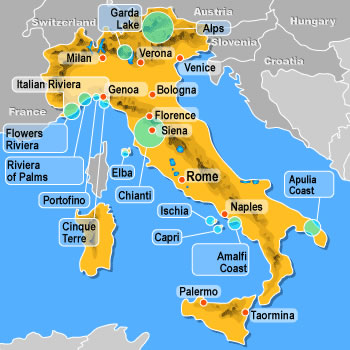
Those are just the most popular places. To see a full list of hotels in cities, hill towns, ski resorts, beaches, islands, and countryside accommodations all across Italy, click on the map below:

Map of hotels in Italy

Related pages


Context Travel - Walking tours, Museum visits, Cultural seminars, and Private guides in Italy


Search ReidsItaly.com

This material was last updated December 2010. All information was accurate at the time.

about | contact | faq

» THE REIDSITALY.COM DIFFERENCE «

Copyright © 2008–2012 by Reid Bramblett. Author: Reid Bramblett



Google
