Venice trip planner
A travel guide to help you plan the perfect vacation to Venice, Italy

Venice is a city of stone built on the water—or at least on the marshy mudflats of a lagoon—a feat of engineering and determination if ever there was one.
With 118 islands piled with Gothic palazzi, tangled with ancient alleys, and threaded by 180 canals plied by gondolas, there simply is no place on Earth like La Serenissima.
Finding the serene side of Venice

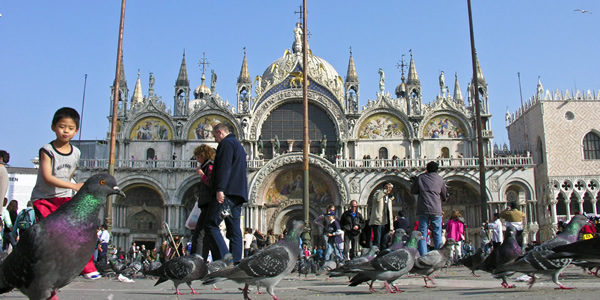
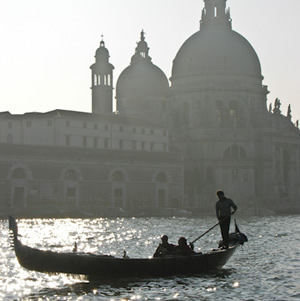
Gondolas on the Grand Canal of Venice.Venice is called La Serenissima, "the most serene," and as anyone who has threaded the narrow streets and some 400 lithe footbridges over twisting canals to link pigeon-filled Piazza San Marco with the Titan– and Tintoretto-filled Accademia painting gallery or the shop-lined Rialto Bridge over the majestic Grand Canal will tell you, that nickname is absolute hogwash.
What's so serene about it? Surely not the hordes of fellow tourists packed in shoulder to shoulder and fanny pack to daypack, inching along those corridor-like alleys that link the city's top sights?
There's nothing serene about line snaking beneath the façade mosaics and five Byzantine domes of St. Mark's cathedral, everyone waiting an hour or more just to get in for a glimpse of the place.
Serenity surely isn't on sale at shop after shop after shop hawking "real Venetian glass" that upon closer inspection turns out to be comprised largely of Simpsons figurines making lewd hand gestures and Santa Claus in various compromising sexual positions? (No, seriously.)
blog: People Who Live on Glass Islands - Learning about the changing face of Venice (and the secret lives of innkeepers) amid the acque alte of 1999...Guess what? Venice has all that, but what makes the city brilliant is that "all that" is so easy to get away from.
Venice's maze of narrow streets frustrate the navigational skills of the best of us—Venetians assure me that even they get lost repeatedly if they venture out of their own little neighborhood. To help tourists on a tight schedule, quick routes between the key spots—San Marco, Accademia, Rialto, Ferrovia (train station)—have been established and the walls at every intersection along them are peppered with little yellow signs that point sightseers in the right direction.
To escape the crush of Venice-in-a-daytrippers, get lost. Just turn right when the sign points left and within a minute you'll find yourself in a Venice where kids kick a soccer ball around a deserted campo (square), older women shelling peas sit in their doorways and conduct conversations with their neighbors across the way, locals duck into a bacaro (wine bar) to prendere un'ombra, which translates as "take a little shade" but means "drink a glass of wine," and munch in cicchetti ($1 hors d'oeuvres).
Who's crazy idea was it to build a city in a lagoon anyway?
As barbarians feeding off the fall of Rome overran the Italian peninsula in the 5th century, some locals in the Veneto region found it safest to settle where no barbarian in his right mind would come looking for them (or their potential plunder)—in the middle of the water.
Other islands in the Venetian lagoon already supported fishing communities, but in short order young Venice managed to establish itself as a shipping center, electing its first doge (ducal ruler of an republican government) in 697. Venice built trade ties with Byzantium to the east and began its inexorable rise as a commercial seafaring power.
By the 13th century, Venice had conquered many of its neighbors, including Byzantium. By the 16th century this trading republic had become the Queen of the Adriatic, a mercantile powerhouse that exercised its control over the entire Mediterranean.
From its formal founding until Napoleon conquered the city in 1797, Venice remained a proud, self-governed republic for a record-setting 1,100 years—the longest surviving independent state in the history the world.After you dutifully tour the great cathedral of San Marco the tourist way, making your way up onto the roof to admire the ancient bronze chariot horses, come back to the cathedral on a Sunday evening for mass at 6:45.
Mass? Yep. While the priest at the altar drones in singsong Latin, incense swirling around him from a saying censor, you can sit in silence for an hour getting a crick in your neck—the 40,000 square feet of glittering mosaics that were inlaid over every single inch of the cathedral's interior from the twelfth to seventeenth centuries, which appear smoke-stained and shadowy by day, are illuminated to their full glittering glory only during this evening mass.
Finally, take a day to take a boat ride out to the outlying islands in the Venetian lagoon: Murano, where the glasswares are of the highest quality (these islanders taught the Venetians how to blow glass); Burano, where the fishing houses are each painted a different super-saturated color and ladies still hand-tatt lace the old fashioned way; and nearly-abandoned Torcello, in the swampy gloom of which Hemingway was once fond of tromping around its millennium-old cathedral glowing inside with golden mosaics.
Venice can be serenissima indeed—if you know where to look.
Why people love Venice despite the crowds
Venice's tremendous wealth and centuries of stable republican rule allowed it to enrich its urban and cultural landscape with hundreds of churches and lay fraternities and to support the careers of some of the great late-Renaissance artists like Titian and Tintoretto, masters of color and mood.
Each year the 60,000 (and falling) residents of Venice's historic center (another 176,000 Venetians live in the landlubbing industrial suburb of Venezia-Mestre, with 31,000 spread around various outlying islands) are vastly outnumbered by the hordes of visitors to their small lagoon. Up to 18 million people visit Venice annually, at times making La Serenissima anything but serene.
At peak season in June, July, and September, the crowds can be staggering and the hotels booked solid. In fact, Venice gets more attention than it really wants, and is debating passing quota laws or a steep bed tax to try to stem the tide of tourists. It may soon become the first European city that you'll need a ticket to enter.
Many people leave Venice enchanted, but just as many hurry away feeling like they've spent two days in tourist hell and been taken for a ride in some kind of canalside Disneyland. But Venice can be wonderful. You just have to learn how to avoid the crowds and know when to cut loose from your sightseeing agenda and instead get to know the real Venice—if you can find it amidst the souvenir stands and behind long museum lines.
I'm here to help.
Reid's List: Venice
1) Tour the outlying islands |
||
Fave Hotels
• Hotel Caneva [cheap] |
Best Eats
• Cicchetti [snack] |
Giardini ex Reali, San Marco (between Piazza San Marco and its western ferry stop)
Vaporetto: San Marco–Giardinetti Reali
tel. +39-041-529-8711
www.turismovenezia.it
» more
Other useful sites
www.veneziadavivere.com [events blog]
www.hellovenezia.com [transport/events]
www.veneziasi.it [good tourist info from local Venice hotels association; last updated Feb 2012]
www.meetingvenice.it [general info; sadly, last updated 2010]
Hotels in Venice
www.venere.com
www.booking.com
www.airbnb.com
www.hotelscombined.com
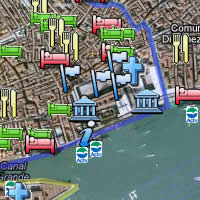
ReidsItaly.com Venice Map
» View ENLARGED MAP with all listings
» THE VENICE BOOKSHELF
This material was last updated April 2013. All information was accurate at the time.
about | contact | faq
» THE REIDSITALY.COM DIFFERENCE «
Copyright © 2008–2013 by Reid Bramblett. Author: Reid Bramblett