- Places
- Plans
- Itineraries
- Experiences
If you're really scrimping on every eurocent, or are particularly fond of fraternizing with primarily youthful backpackers, you might want to stay in hostels, where you can get a bunk in a shared dorm for around $15 to $35.
I'm not a fan of hostels. Never did like them, really, not even when I was a backpacking student, but that's just me.
You, though, might enjoy the camaraderie, the chance to rub elbows with other English-speakers, the evenings of contributing an ingredient to the communal spaghetti dinner someone is whipping up in the kitchen while your laundry spins in the back room, a dreadlocked dropout strums a guitar, and everyone sits around and shares travel tips and recently discovered gems not yet in the guidebooks.
There's much more on Italian hotels—what to expect, common rules, and what they are like—below under "Tips."
In most hostels, you sleep in a bunk bed in a shared dorm room (some sex-segregated; others mixed).
That said, virtually no hostels these days are of the old-school variety: 30 cots in a large room with a single large bathroom down the hall shared by the entire floor.
Most modern hostels have rooms with only 6 to 8 beds in them (up to a max of 10 or 12 in some). Sometimes each room even has its own attached bathroom; at others, you do share baths down the hall.
Some rooms have TVs (though I view that as a drawback: what if you want to go to sleep early but another resident wants to blare a reality show at 11pm?).
Most hostels have rooms of varying sizes, and offer sliding scale of rates: the more beds per room, the cheaper it is to stay.
Since these rooms are shared with strangers, hostels also provide lockers for guest use.
Increasingly, hostels provide all bedding, including sheets (in the old days, they'd just give you a blanket), but it still behooves you to bring your own sleep sack (kind of like a thin sleeping bag made out of a sheet; see the tip below). Note: Do not bring your own sleeping bag. Many hostels have a rule against using them—and for a very good reason. (Two words: bed bugs.)
Plenty of hostels also offer private accommodationssleeping 2–4 people (with or without attached private bathroom) at rates competitive with cheap hotels—an excellent choice for families.
Aside from the sleeping arrangements (detailed above), hostels are defined by their backpackers-of-the-world-unite atmosphere.
Most hostels have a friendly, laid-back, budgeteers-on-vacation vibe. They are places for the young and young-at-heart to live and travel in a college student kind of way.
There are playful murals on the walls or retro-chic lounges for cocktails, TV rooms, tour desks and games rooms with Foosball and billiards tables, restaurants (ranging from bland cafeteria to cheap ethnic) and communal kitchens where newly-minted friends can pool ingredients to whip up a spaghetti dinner.
There are usually computer temrinals for Skyping home and booking your next hostel down the road. Nearly all have WiFi—some free; others at a cost of €1-€4 per day.
Many have pubs (which can be great fun—unless you want to go to bed early, at which point they become annoyingly noisy).
Some hostels host theme nights, from dance lessons to DJs, movie nights to karaoke.
There is cheap laundry service or D.I.Y. machines, vending machines, ATMs, and library shelves where travelers can swap books.
You get a bed—usually a bunk bed— in a shared dorm, though, again, private rooms are usually also available at a slightly higher price.
The cheapest hostels are on an a la carte model, charging extra for every little thing, including WiFi (€1-€4) and breakfast.
Other hostels throw in the WiFi and breakfast for free. Some even have amenties like free soft drinks, salsa lessons, and other perks.
Traveling solo, a hostel offers a great savings over the cost of a single room at a hotel.
Even for two people traveling together, you can often stay at a hostel for €14–€50 total, making it chepaer than most hotels.
Also, some folks simply like the backpacker vibe, laid-back comaraderie, and mingling of travelers that a hostel provides. It can be as much a lifestyle and community choice as a lodging one.
Thankfully, most of the old, draconian hostel rules have since faded into bitter memories.
Mostly gone are the evening curfews and midday lockout periods. Some still do put a limit on how long you can stay (often no more than three days).
Here are three of the biggest downsides to hostels:
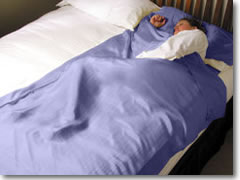 Buy a sleep sack before you go or make one. Hostels will accept homemade ones out of a basic cotton top sheet (fold it in half the long way, sew across the bottom and 2/3 of the way up the side), as well as the kind I use: the silk sleep sack you can get from travel and camping outfitters that packs teensy and is dreamily comfortable.
Most hostels provide a blanket, but require that you use your own sleep sack, which is basically a sheet folded in half lengthwise and sewn across the bottom and most of the way up the side—sort of like an ultra-thin sleeping bag (and sometimes called a "sleeping bag liner").
However, note that you cannot use your own sleeping bag, or a sleeping bag liner with a thick pile to it. This is because Lord knows where you've been and for all the hostel know your bag is infested with bedbugs, which they'd rather you not introduce into their beds.
Should you lack one, some hostels will sell you a sleep sack on the spot.
| English (Inglese) | Italian (Italiano) | Pro-nun-cee-YAY-shun |
| Good day | Buon giorno | bwohn JOUR-noh |
| Good evening | Buona sera | BWOH-nah SAIR-rah |
| Good night | Buona notte | BWOH-nah NOTE-tay |
| Goodbye | Arrivederci | ah-ree-vah-DAIR-chee |
| Excuse me (to get attention) | Scusi | SKOO-zee |
| thank you | grazie | GRAT-tzee-yay |
| please | per favore | pair fa-VOHR-ray |
| yes | si | see |
| no | no | no |
| Do you speak English? | Parla Inglese? | PAR-la een-GLAY-zay |
| I don't understand | Non capisco | non ka-PEESK-koh |
| I'm sorry | Mi dispiace | mee dees-pee-YAT-chay |
| Where is? | Dov'é | doh-VAY |
| ...a hotel | un albergo | oon al-BEAR-go |
| ...a B&B | un bed-and-breakfast | oon bet hand BREK-fust |
| ...a rental room | un'affittacamera | oon ah-feet-ah-CAH-mair-ra |
| ...an apartment for rent | un appartamento | oon ah-part-tah-MENT-toh |
| ...a farm stay | un agriturismo | oon ah-gree-tour-EES-moh |
| ...a hostel | un ostello | oon oh-STEHL-loh |
| How much is...? | Quanto costa? | KWAN-toh COST-ah |
| a single room | una singola | OO-nah SEEN-go-la |
| double room for single use [will often be offered if singles are unavailable] | doppia uso singola | DOPE-pee-ya OO-so SEEN-go-la |
| a double room with two beds | una doppia con due letti | OO-nah DOPE-pee-ya cone DOO-way LET-tee |
| a double room with one big bed | una matrimoniale | OO-nah mat-tree-moan-nee-YAAL-lay |
| triple room | una tripla | OO-nah TREE-plah |
| with private bathroom | con bagno | cone BAHN-yoh |
| without private bathroom | senza bagno [they might say con bagno in comune—"with a communal bath"] | SEN-zah BAHN-yoh |
| for one night | per una notte | pair OO-nah NOH-tay |
| for two nights | per due notti | pair DOO-way NOH-tee |
| for three nights | per tre notti | pair tray NOH-tee |
| Is breakfast included? | É incluso la prima colazione? | ay in-CLOO-soh lah PREE-mah coal-laht-zee-YOAN-nay |
| Is there WiFi? | C'é WiFi? | chay WHY-fy? |
| May I see the room? | Posso vedere la camera? | POH-soh veh-DAIR-eh lah CAH-mair-rah |
| That's too much | É troppo | ay TROH-po |
| Is there a cheaper one? | C'é una più economica? | chay OO-nah pew eh-ko-NO-mee-kah |
Share this page
Search ReidsItaly.com



This article was written by Reid Bramblett and was last updated in July 2013.
All information was accurate at the time.
about | contact | faq
» THE REIDSITALY.COM DIFFERENCE «
åß
Copyright © 2008–2017 by Reid Bramblett. Author: Reid Bramblett


